

UQ PhD perfects non-petrochemical punnet for strawbs
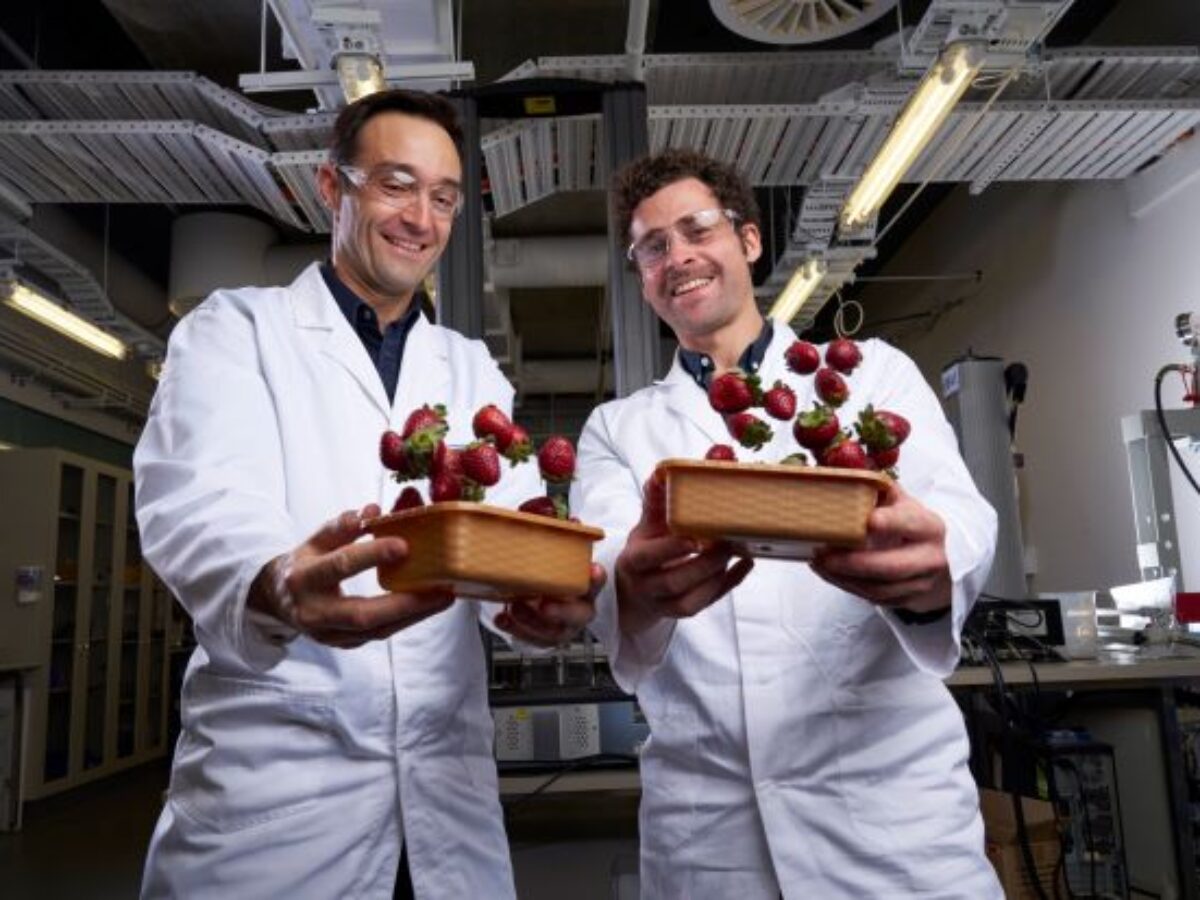
A biodegradable composite plastic – incorporating fermentation-derived polyester and sawdust from radiata pinewood sawdust fibres – has been developed and tested as food packaging by University of Queensland researchers.

According to a statement from the university on Thursday, the bioplastic has been tested in a strawberry punnet, and can break down “in soil, freshwater, the ocean, and in compost.” It was developed by PhD candidate Vincent Mathel and Dr Luigi Vandi as “a commercial alternative to petrol-based plastics.”
Mathel said the new material “carries all the sustainability benefits of a bio-sourced product” along with the same properties as mass-produced plastic packaging and containers.
“It was also important to us to make a biocomposite that maximises Australian resources to have the added, environmental benefit that it does not need to be imported from overseas,” Mathel added.
According to Vandi: “We’ve shown we can make a product that could potentially replace the 580 million or so plastic punnets every year.”
The PhD student and supervisor spent three years working on the biocomposite material at UQ’s Centre for Advanced Materials Processing and Manufacturing (AMPAM), with support from industry collaborators – including WA-based bioplastics startup Uluu and injection moulding specialist SDI Plastics – and an Advance Queensland Industry Research Fellowship.
A run of 200 punnets was created with input from Queensland Strawberry Growers Association and Mandy Schultz from LuvaBerry Farm.
The punnets blends biodegradable polyesters known as polyhydroxyalkanoates (PHAs) with Radiata sawdust wood fibres as a “biofiller”, due to its abundance and low cost.
Mathel said the team is currently compiling data on the end-of-life composting, in collaboration with Phoenix Power Recyclers led by senior environmental scientist Dr Deepak Ipe and general manager Chris Alexander.
He hopes the material will be used for food packaging and other rigid plastic applications, and is currently seeking financial backing to establish manufacturing.
Picture: Vandi (left) and Mathel with some punnets (credit Aubrey Jonsson)
Further reading
Biodegradable bags to revolutionise mushroom farming
‘Biodegradable’ plastic will soon be banned in Australia. That’s a big win for the environment
Tiny manufacturers: How black soldier flies are turning food waste into valuable products
Fermented clothing? Here’s how the biofilm on kombucha can be turned into green textiles
Bioplastics uses confused by lack of labelling – CSIRO

More in this section
@aumanufacturing Sections
Analysis and Commentary Awards Casino reviews Defence Gambling Manufacturing News No deposit Bonus codes Online Casino Podcast Technology Videos