Cobalt refinery contract signed
Mining and mineral processing company Cobalt Blue announced on Thursday that it has signed a contract with Glencore to supply up to 50 per cent of the Kwinana Cobalt Refinery’s (KCR) feedstock needs for the first three years of operation. Calling it “a crucial milestone in KCR’s development”, the company said it brought it a step closer to financial investment decision (FID) for construction. “Specifically, Glencore will supply KCR with cobalt hydroxide, the key feedstock for the plant’s production of cobalt sulphate and metal products” it expanded. “We are in advanced discussions with other suppliers of cobalt feedstock in Australia and internationally to fulfil the refinery's remaining requirements”.
Non-hydrogen ironmaking webinar now available
The HILT CRC has published a new presentation by experts Professor Geoff Brooks from Swinburne University of Technology and HILT CRC board member Neil Goodman, director and former CEO at Magnum Mining & Exploration, on non-hydrogen ironmaking. Brooks discusses technologies helping to decarbonise the iron and steel industry, and Goodman (a recent guest on the @AuManufacturing Conversations podcast) provides an industry perspective. According to a description, technologies covered include electrolysis to directly reduce iron ore without fossil fuels, sustainable biomass sources as alternatives to coal and coke, and metallothermic reduction (using metals with higher affinity for oxygen than iron to reduce iron oxide to metallic iron.) The presentation, made this week, is available here.
Quantum professor, entrepreneur to present at NSW parliament event
Professor Andrew Dzurak, CEO and founder quantum computing company Diraq, will give a free talk on “Revolutionising the Future of Quantum Computing Technology” next month. The talk is part of the Science & Research Breakfast Seminar Series, and will be held at the Strangers’ Function Room at Parliament of NSW, Sydney on June 26 at 8 am sharp. According to the event listing, “Quantum computing is a groundbreaking technology shift, with the potential to solve complex problems far beyond the capabilities of today's classical computers”. Diraq bases its technology on silicon, and is a world leader in developing quantum processors that use silicon “quantum dot” technology. More information on the event, hosted by the Office of the NSW Chief Scientist and Engineer, is available here.
Weld Australia warns that Aussie fabricators face extinction
Welding industry representative Weld Australia has said that “urgent government intervention” is needed “to prevent the collapse of Australia’s local welding and fabrication industry”, repeating its warning on the impacts of non-compliant, imported fabricated steel. Geoff Crittenden, CEO of Weld Australia, said there were three pressing national priorities: enforcing compliance with international quality standards, implementing mandatory inspections of imported fabricated steel, and introducing enforceable local content requirements in government procurement. “In the last 18 months alone, an estimated $282.9 million worth of fabricated steel, or 62,866 tonnes, has been imported into Sydney from overseas,” said Crittenden. “In real terms, $282.9 million worth of fabricated steel equates to 12 months’ worth of work for 400 full-time welders, or approximately 16 mid-sized local Australian fabrication businesses.” He added that some NSW members estimated a 40 per cent decrease in business over the last 18 months—citing imports as the key cause.
Record divide in SME revenue growth, report finds
A gap between the most positive and negative six-month revenue growth forecasts for Australian SMEs has stretched to 48 percentage points, from +18 per cent to -30 per cent, according to business finance specialist ScotPac. The company's bi-annual SME Growth Index Report has been running for 11 years and had never recorded such a result, it said on Thursday, exposing a “sharp contrast in SME confidence across borders and business sectors.” Overall, 59 per cent expected half-year revenue growth, a near-record high, but a third of businesses nationally expected revenue to fall. “The surge in optimism from businesses in resource-rich states shows no signs of slowing, while SMEs with tight margins or high exposure to discretionary spending are understandably more cautious about the future,” explained ScotPac Group Executive – Client Acquisition, Craig Michie. “There are more challenges on the horizon for business owners with the super guarantee set to rise again in July, and the ongoing uncertainty around tariff policies.” The research was conducted by East & Partners, interviewing 724 SME enterprises with annual revenues between $1 million and 20 million.
Bradfield, OMRON sign MoU
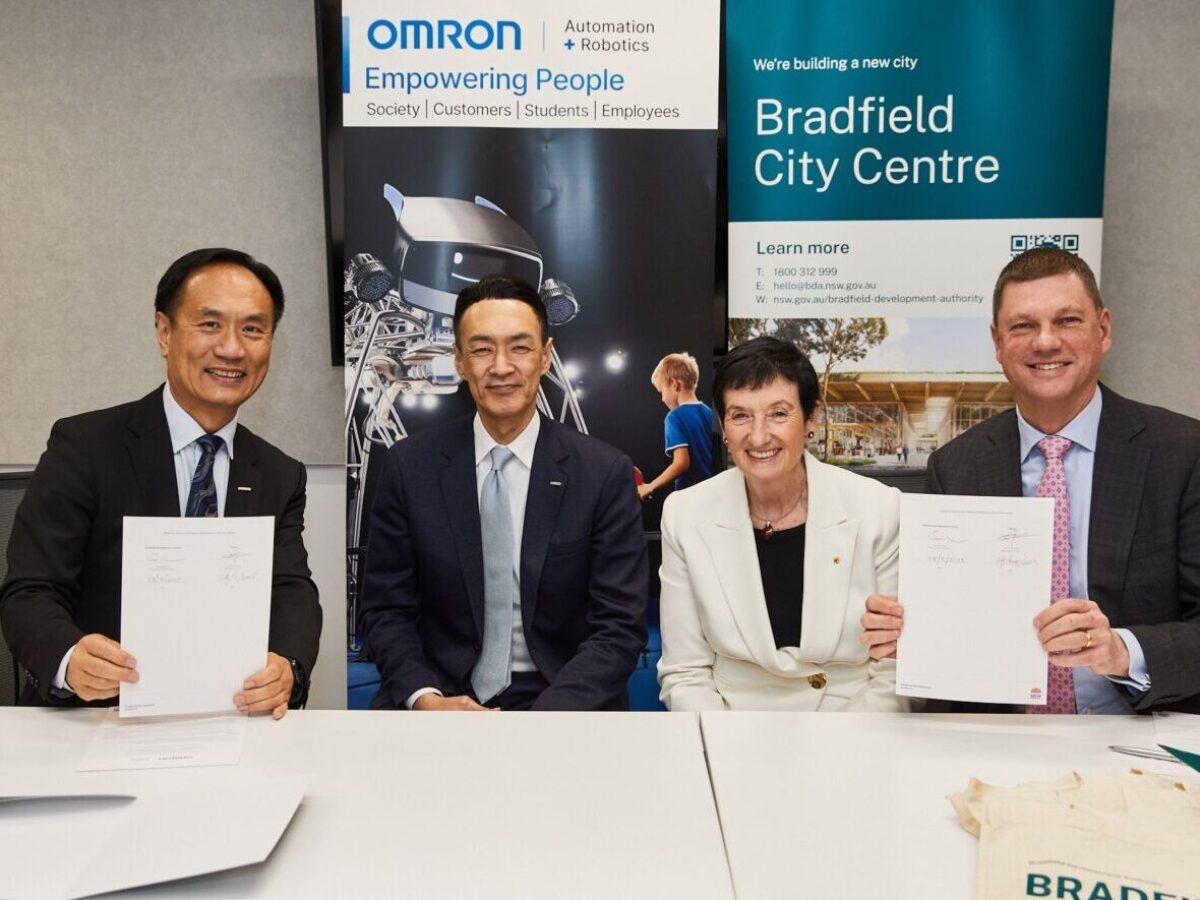
A new partnership between the Bradfield Development Authority and Japanese automation company OMRON was announced on Thursday, with the BDA's Advanced Manufacturing Readiness Facility (AMRF) to work with OMRON’s global network of Proof of Concept Centres. According to a statement from industry minister Anoulack Chanthivong and others, this will “promote innovation, technology exchange, and productivity improvements across Western Sydney’s growing manufacturing sector.” The Memorandum of Understanding (MoU) signing represented another major step “to build Australia’s first city in 100 years, a city powered by high-tech industries and underpinned by a world-class advanced manufacturing ecosystem.” The AMRF provides equipment, training, and expertise to manufacturers. The collaboration with OMRON will support shared research, technology demonstration, and industry upskilling. Chanthivong said the partnership “will see Western Sydney businesses gain access to cutting-edge automation technology, global best practice, and new opportunities to scale their ideas.”
Picture: credit Bradfield Development Authority/Linkedin