

Between Botswana and the Ivory Coast: Australia dives further in economic complexity rankings to 105th
The newly-returned government’s ambition to make Australia a manufacturing powerhouse comes with its difficulties, as newly-updated Economic Complexity Index (ECI) rankings show Australia in its worst placing yet.

The rankings are published by the Harvard Kennedy School’s Growth Lab and go back to 2000. They measure the sophistication and diversity of a country’s exports.
An official announcement on the most recent rankings – and an updated set of information for individual countries, including growth projections based on the ECI – will happen in the near future, the Growth Lab told @AuManufacturing on Tuesday (Australian time.)
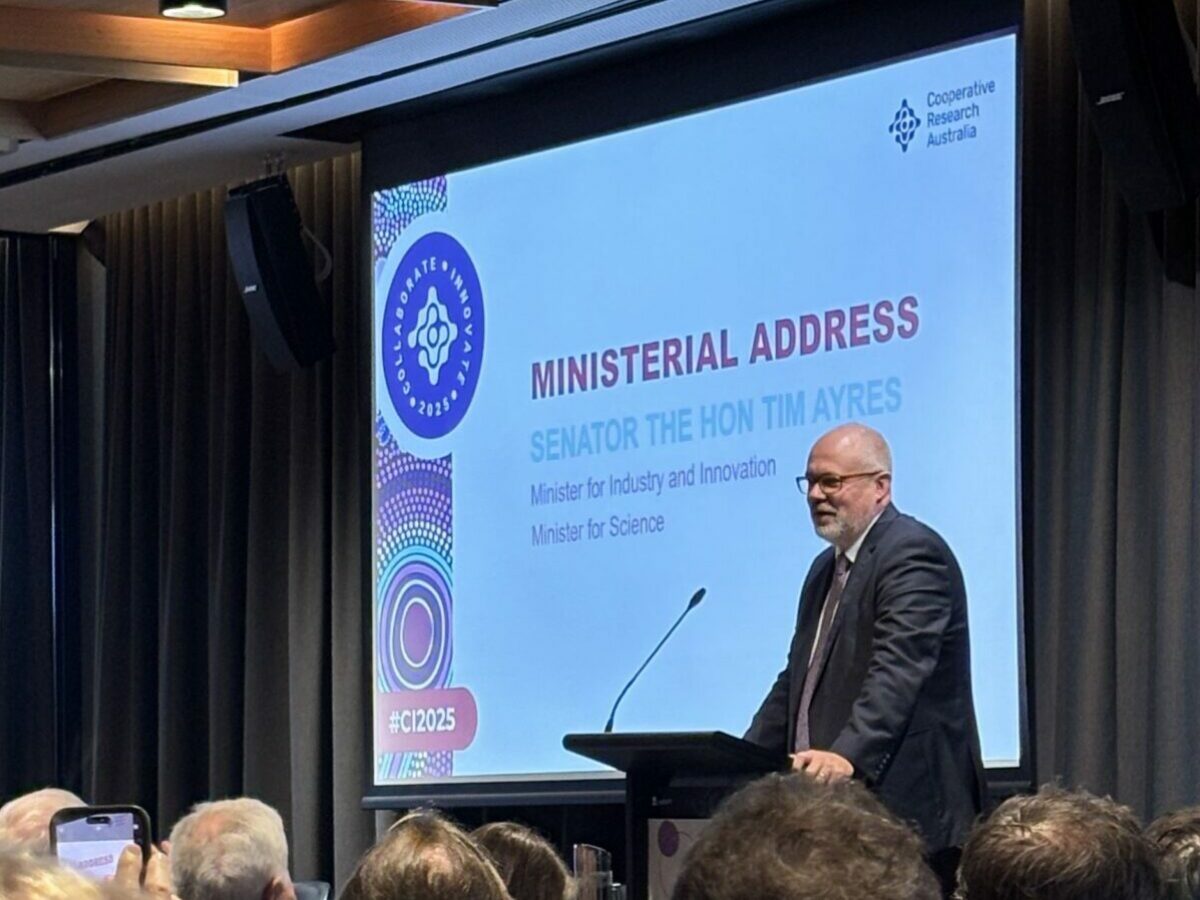
The news coincided with a keynote speech by new federal industry minister Tim Ayres to the Collaborate Innovate Conference 2025.
During it he described the industry policy task ahead of the government as “very clear. Australia must build its economic complexity and resilience, and do it with purpose and urgency.”
The ECI ranking of 105th is Australia’s equal worst (with 2014) and places it behind Botswana and in front of Côte d'Ivoire.
The index results are based on mathematical analyses of trade data from 2023.
According to the ranking methodology, high performers are “home to a range of sophisticated, specialized capabilities and are therefore able to produce a highly diversified set of complex products.”
Singapore leads the newest rankings, up four places from 2018 – 2023, followed by Switzerland (no change in that time), Japan (down two places), Taiwan (up two) and South Korea (down two.)
According to the Growth Lab, high economic complexity is, among other things, also a reliable indicator of a country’s “GDP growth prospects… in the next 5-10 years, based on its productive capabilities”.
Countries more complex than expected for their income level, such as Vietnam and China, will be growth leaders over the next decade, according to Tim Cheston, Senior Research Manager at the Growth Lab.
“The converse also holds: countries like Australia that are far less complex economies than expected for their income level will face slower than average growth for the medium-term,” Cheston tells us.
“The low, declining economic complexity in Australia shows the downsides of relying on a narrow set of commodity exports to one destination, in China, whose once insatiable appetite is now slowing considerably.”
Cheston gives the qualification that – as services do not conveniently pass through customs – it is hard to measure service exports “in high-definition”.
Australia has “many world-class services, including in education, tourism, and business services, that open better opportunities as a base to diversify into related, high-complexity sectors” he adds.
“Yet, on the whole, Australia’s service exports have not been growing steadily and have not proven able to compensate for shocks to commodity prices.”
You can read the new rankings here.
A recent interview with Cheston on the @AuManufacturing Conversations podcast, published last November, can be accessed here.
Picture: Tim Ayres (credit Powering Australia/Linkedin)
Further reading
Australia goes from terrible to worse in economic complexity, but nobody seems to notice
Australia’s lack of economic complexity on display – again
Australia’s low economic complexity – infographic
Some thoughts on industry policy for the next federal government

More in this section



@aumanufacturing Sections
Analysis and Commentary Awards Casino reviews Defence Gambling Manufacturing News No deposit Bonus codes Online Casino Podcast Technology Videos