

Monash team makes “significant advance towards commercialisation” for carbon capture
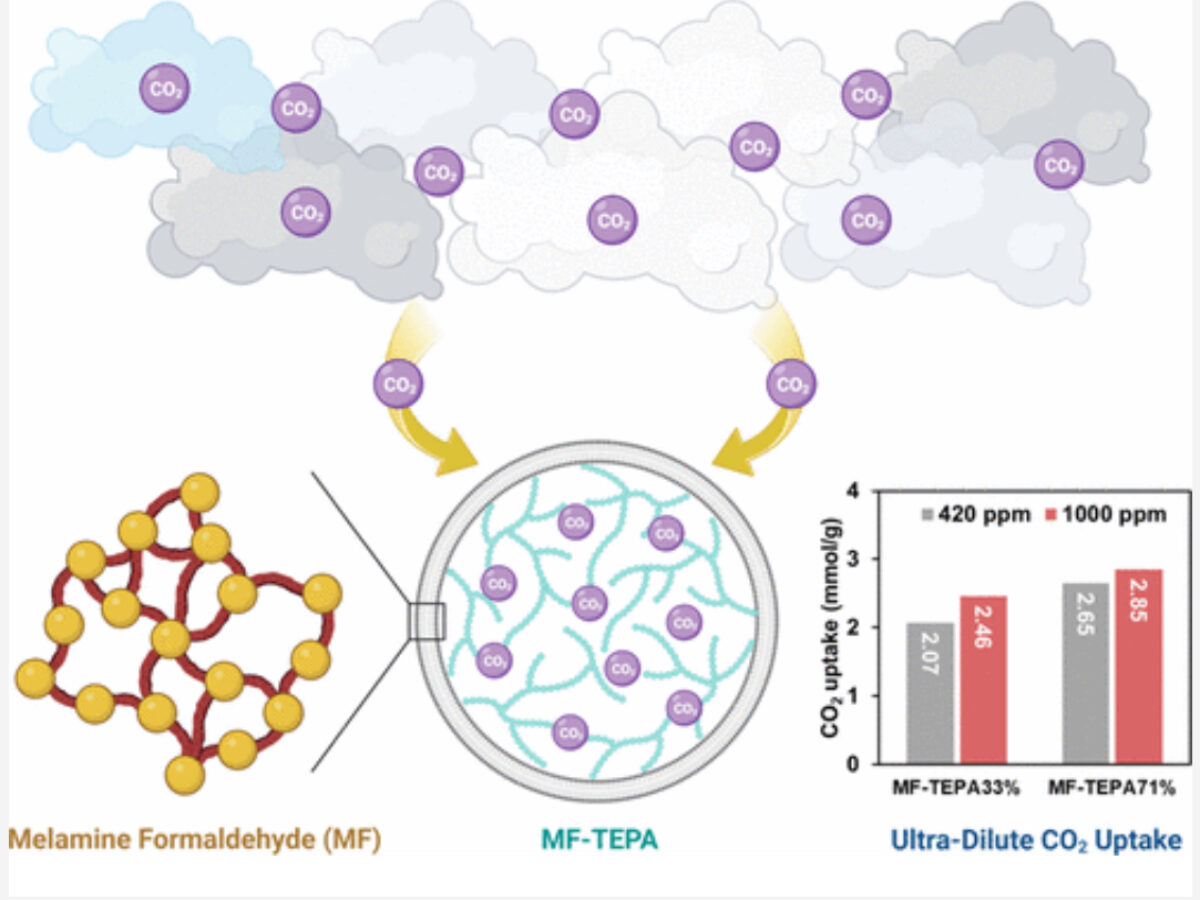
Monash University researchers have developed a new family of materials claimed to be “relatively easily” and affordably made and able to capture excess carbon dioxide from the atmosphere.

According to a statement from the university on Thursday, “meso-macroporous melamine formaldehyde (MF)” is a promising base for direct air capture (DAC) of CO2. MF is made of low-cost industrial materials melamine and formaldehyde and “can be easily impregnated with tetraethylenepentamine (TEPA)”, which is a known adsorbent for the greenhouse gas.
“We believe these MF materials represent a significant advance towards commercialisation of DAC processes,” said co-lead researcher Professor Paul Webley, a Professor of Chemical Engineering at Monash University and the Director of the Woodside Monash Energy Partnership.
“The ultrahigh pore volume and the meso-macroporous structure makes MF a superior base for making DAC adsorbent materials.”
According to its summary, the study shows a way to “a straightforward and scalable synthesis method” of such materials, which could offer “superior performance for practical applications”.
The team’s work was published in the journal ACS Applied Materials & Interfaces in April, and titled “Amine-functionalized meso-macroporous polymers for efficient CO2 capture from ambient air”. It can be accessed here.
Picture: credit ACS Applied Materials & Interfaces

More in this section




@aumanufacturing Sections
Analysis and Commentary Awards Casino reviews Defence Gambling Manufacturing News No deposit Bonus codes Online Casino Podcast Technology Videos